From the NY Times:
THE only way to know when the residential real estate market has “hit bottom” will be with a look in the rear-view mirror, according to Jeffrey G. Otteau, the New Jersey-based real estate analyst.
“It will appear from the shadows, months after it actually occurred,” when sales have picked up for several consecutive months, said Mr. Otteau, whose East Brunswick company, the Otteau Valuation Group, studies sales-contract data that it compiles from almost all of the state and provides monthly to subscribing brokers.
…
But the latest statewide numbers — from March — do make one thing absolutely clear: The turning point has not yet been reached.“The clear signal,” despite a 9 percent increase in the number of sales in March over February, “is that the housing market has further to fall,” Mr. Otteau said in the newest report.
Home sales were down 27 percent from the previous March, which continued a pattern for 2008. They are running well behind 2007, which was itself a year of declining sales volume and dropping prices.
“It’s spring,” Mr. Otteau added in an interview. “The numbers always go up during the spring selling season, but you’re still talking about contract sales that are the weakest in recent history.”
The reports do not show shifts in average sales prices on a monthly basis. But given the sluggish sales pace, Mr. Otteau said prices would certainly continue to decline throughout the spring and summer.
…
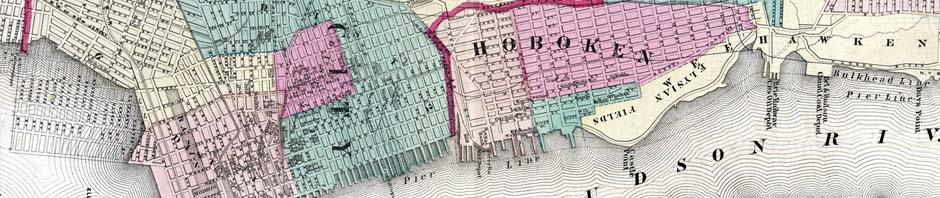
Three years into this market malaise, there is no specific type of community that remains entirely immune, Mr. Otteau said. The latest statistics point toward deteriorating conditions even in downtown redevelopment areas that have attracted thousands of young professionals and empty nesters in recent years.In Hoboken — the state’s pre-eminent example of transformation from tenement grit to condo glitz — the newest numbers hint at a downturn after a solid decade of robust growth: the supply and demand ratio has sunk to 43 percent, from 78 percent last year. There were 507 unsold homes on the market, a seven-month supply. And the average number of sales per month was down to 70, from 115 last year.
“Until pretty recently,” Mr. Otteau explained, “Hoboken was running counter to the rest of the market, mostly because of ‘overflow’ demand from New York.” He was referring to buyers who were fleeing higher apartment prices in Manhattan for relative bargains across the river.
Now, though, various factors have kicked in to abet a slowdown: tighter mortgage-lending standards; growing buyer unease over the continuing decline in home values; and the prospect of Wall Street cuts of 36,000 jobs, according to federal Labor Department projections.
…
But the graph of contract-sales activity that accompanies Mr. Otteau’s latest report tells a different story. In the three previous years, the line had climbed sharply to a peak in March; this year, the peak is more of a molehill.He summed up his advice to brokers this way: “Expect the spring selling season to be late and brief, with only a modest increase in sales activity, and prices continuing to drift downward.”
From the APP:
Benefits for N.J. seen in housing bill
Two House-passed measures aimed at defusing the nation’s real-estate crisis would help New Jersey homeowners and the state’s housing market stabilize, supporters say.
But they have powerful opponents including President Bush, who has threatened to veto one of the measures. Both pieces of legislation, which passed Thursday, await consideration in the Senate.
Both are intended to help homeowners facing foreclosure and communities dotted with abandoned foreclosed homes.
The package contains a provision sponsored by Rep. Rush Holt, D-N.J., creating a new property tax deduction of $350 to $700 for those who don’t itemize on their federal tax returns — a potential boost for New Jerseyans, who pay the highest property taxes in the country.
Jarrod Grasso, executive vice president of the New Jersey Association of Realtors, said in a telephone interview from his Edison office Friday that the Northeast has been spared the brunt of the real-estate woes other states like Florida, California and Nevada are facing.
But New Jerseyans looking to buy homes are finding that the days of no-money-down loans and easy credit are long gone.
Grasso said the House-passed measures — which he lobbied the New Jersey congressional delegation to support during a visit to Capitol Hill last month — would help homeowners facing foreclosure and simultaneously reduce the inventory of unsold homes.
He singled out one House-approved bill that would give first-time homebuyers a $7,500 tax credit to deplete existing inventories.
“This is going to help people get into the market. If there’s one message I’d like to pass on to our U.S. senators, it’s this: We need . . . this legislation,” said Grasso, whose industry would profit if there’s a sudden surge in buyers.
From Bloomberg:
HSBC Will Announce Writedown of $4.6 Billion, Observer Reports
HSBC Holdings Plc will tomorrow announce a writedown of $4.6 billion linked to losses against mortgages, credit cards and other loans to U.S. consumers, the Observer reported, without saying where it got the information.
So good, you’ve placed twice!
Congrats on being in both 1st and 8th place on the FHA RE Blog contest!
From the AP:
Analysis: Good economic news something of a mirage
The unemployment rate drops. Productivity grows. The trade deficit shrinks. Sounds great, right? Not so fast.
…
Let’s take the unemployment rate, which dipped to 5 percent in April, from 5.1 percent in March. A closer look reveals that the decline in unemployment is not as good as it looks at first blush. The drop came as the number of people holding part-time jobs for economic reasons swelled to 5.2 million in April, up sharply from 4.4 million a year earlier.
The dip in the unemployment rate also occurred as employers cut jobs for the fourth month in a row, pushing up total losses beyond the quarter-million mark — to 260,000. Wages barely grew and workers’ hours were trimmed. Taken altogether, these things point to a tepid picture of employment conditions nationwide.
…
U.S. productivity — an important ingredient to the country’s long-term vitality — grew solidly in the first three months of this year. That efficiency gain, however, came at the expense of workers.
“Productivity gains were due primarily to declines in hours worked,” the Labor Department’s Bureau of Labor Statistics explained. Those hours fell at a 1.8 percent pace, the biggest drop in five years. Employers also shed workers in the first quarter. Thus, companies were able to produce more with fewer workers, and that boosted productivity, the amount an employee produces for every hour of work.
…
In another anomaly, consumer borrowing rose in March at the fastest clip in four months. It sounded like people were back in a buying groove, with credit card charges especially heavy. But building up the credit charge balances is another form of debt. Economists said people don’t have a choice because their paychecks aren’t going as far and they can’t tap into their homes, as they did during the housing boom, for ready sources of cash.
So some silver linings are not so silver.
When you look closely, “you do see some dark economic clouds in the silver linings,” said Mark Zandi, chief economist at Moody’s Economy.com. “The darkness is much greater than any sunshine.”
Thanks Sassy
Montclair is crumbling.
65 Elson Road, Montclair NJ
Purchased: 8/1/2003
Purchase Price: $580,000
My wife and I went to see this house when it was for sale in 2005. This was one of the “trigger” houses that pushed me to launch this blog
MLS: # 2070108
Listed: 4/20/2005
Original List Price: $649,900
LP: $609,000
DOM: 183
Expired
It was a complete wreck, we couldn’t believe that they were asking $600k+ for this piece of junk. I’ve talked about this house before, this is the house with the shower in the hallway closet.
What happened Montclair?
MLS# 2516480 – 65 Elston
Foreclosed – REO
Listed: 5/9/2008
Current Asking: $499,900
Active
Not even a good deal at this price, I have no doubts that the home is trashed and likely has considerable structural damage in the roof.
Happy Mother’s Day to all the Moms on the blog!
(7) Thanks Grim! I’ll be seeing my daughters and grandchildren in June – Just as soon as school is out – can’t wait!
Question on the contest – It said in the rules you could vote once each day but when I try to return on another day, it won’t allow me to vote again…did I misread the rules?
I could have sworn this house was listed at 469k a few months back. Now it’s at 399k.
It’s in Green Brook. I think it’s north of 22 up on the hill.
http://www.realtor.com/search/listingdetail.aspx?ctid=46337&typ=7&sid=ba194e9ed4dd4a64a8e179db1fa77a7d&pg=11&lid=1090442886&lsn=109&srcnt=165#Detail
I’m also seeing houses in Summit below 400k. Don’t know if they are in the “slummit” section, but they look well maintained. this seems like the best of the bunch.
http://www.realtor.com/search/listingdetail.aspx?ctid=89707&ml=3&mxp=28&typ=7&sid=b2a0090a402748c2a751e5fa154b198e&pg=2&lid=1095496290&lsn=14&srcnt=26#Detail
I should email this listing to those realtors who claimed Summit never goes down and a pos would cost at least 500k.
bairen,
7 West End Ave – Current asking $399,000
Short sale, currently in Atty. Review
Purchased: 4/15/2005
Purchase Price: $495,000
I could have sworn this house was listed at 469k a few months back.
OLP was $479k.
Thanks grim.
Are we starting to see a few drops of blood in the streets?
Grim –
21K in tax is daunting…
Montclair is crumbling.
65 Elson Road, Montclair NJ
Purchased: 8/1/2003
Purchase Price: $580,000
My wife and I went to see this house when it was for sale in 2005. This was one of the “trigger” houses that pushed me to launch this blog
MLS: # 2070108
Listed: 4/20/2005
Original List Price: $649,900
LP: $609,000
DOM: 183
Expired
It was a complete wreck, we couldn’t believe that they were asking $600k+ for this piece of junk. I’ve talked about this house before, this is the house with the shower in the hallway closet.
What happened Montclair?
MLS# 2516480 – 65 Elston
Foreclosed – REO
Listed: 5/9/2008
Current Asking: $499,900
Active
Not even a good deal at this price, I have no doubts that the home is trashed and likely has considerable structural damage in the roof.
grim –
My husband and I have been renting in Montclair since 2004. We have a fantastic deal ($1620 for a 3 bedroom with a sunporch, two blocks from the train), so we’ve been happy renters.
We have two young boys however and are definitely feeling the pain because we don’t have a yard or a big enough space for them to run around – their energy is daunting.
We are fortunate to have accumulated a large savings and have plenty for a downpayment. So we have been attending open houses and seeing things with our realtor for about 4 weeks. What amazes me is that there are a ton of things just sitting here (along with some nice price reductions), but anything in the 500-600 range that has upgrades still gets multiple bids the first week. 252 Valley Road and 15 Park Terrace are two such properties. 252 was listed for $595 and went for $626. 15 Park Terrace also went for over asking – charming but teeny house.
Seems like New Yorkers who just sold their million+ apartment on the Upper West Side still feel Montclair is desirable and a bargain. We are starting to seriously consider Glen Ridge.
eclectic,
15 Park and 252 Valley went fast because they were priced well. Heck, I even looked at those two.
15 Park was purchased in 2004 for $515k. Seems like everything on Park Terrace is for sale: 13, 12, 22, 15.
252 Valley is typical Burgdorff, price low and attract multiple bidders. They are one of the smartest agencies around. Almost every Burgdorff listing will sell over asking. That isn’t anything special for them, in fact, it’s status quo.
We are starting to seriously consider Glen Ridge.
Wife and I have seen some interesting properties in GR lately as well.
Although your phrasing seems to suggest that somehow GR is a step down from Montclair? Not sure that I agree.
grim –
We’ve noticed the list low, expect high/multiple bids as well with Burgdorff.
Are you considering buying in Montclair?
We love it here, but still feel like what we can get for our money is pretty substandard. We are looking in the 500-600K range. That said, what our money will buy is a LOT better now than it was in 2005. We had a brief house hunting stint back then and it was basically entertainment value. Also, there was very little available for under 500K.
Did you see the 9 Riverview house? Nice upgrades, fantastic street, a bit out of the way. We just saw that one yesterday.
“Happy Mother’s Day to all the Moms on the blog!”
Second that!
grim –
You are right, my phrasing did suggest that. It’s not an accurate reflection of how we feel though.
We’ve been torn. We love the vibe of montclair, the walkability (especially where we are now) and the urban feel. But the traffic is NUTS, the magnet school system now seems like a detriment and the housing prices, well …
We love Glen Ridge, and from what I hear, everyone loves that the kids can just walk to the neighborhood school and it’s not as busy as Montclair.
Seems like if our purpose for living in the burbs is to send our kids to a great school in a safe town, Glen Ridge seems like the better deal.
Grim / Electric:
I’m renting on Bay ave by Broad street. My wife and I have been looking in Glen Ridge. Over the last few months, I’m starting to see some houses sit, but anything that goes to the Forest ave schools is holding strong. (we have a 1 year old). Once you cross Bay ave, you are starting to get exposed to some of the not so nice parts of Bloomfield / orange. If you stay on the Montclair side of Glen Ridge, pricing is holding strong. By the way, Grim – you’ll get way better bang for your property tax dollar in GR.
Grim – what do you think of 132 Stonehouse?
Grim
Would you mind checking on 45 Skytop Mahwah???A REAL POS but the sign’s down after a long time and I’m wondering…we used to live in that development in the cutest house ever (to small once the family grew) and at one point the houses there were selling in the 800’s…yikes… talk about overpaying..and you can’t walk anywhere from that development…Wyckoff Ave has no sidewalks and is just meant for organ donations..and to really make it bad our cute little dutch colonail there now looks awful…we loved that house!
As to Mahwah…it may be a bit of a joke town…but the taxes are some of the best(lowest)in BC and the schools have improved alot..most overpriced and underserved??? Ridgewood…good luck with snow/leaf removal…oh and pay 20k+ in taxes with NO school buses..Snotty Franklin lakes…NO sewers or town water…same thing in Upper Saddle River..
“Ron Paul…..love him! His fiscal policys were so right on but his electability was …well not so good”
The 90% media run and owned by 5 companies.
These 5 companies have major ties to politicans and groups whom don’t want Paul or his messages because they are so different from the status quo.
SAS
From the article:
“He was referring to buyers who were fleeing higher apartment prices in Manhattan for relative bargains across the river”
Calling bluff here.
This isn’t happening.
People are leaving Manhattan because they have lost there jobs.
SAS
I like to keep my eyes on the “days of market”
that can tell you alot, rather than a little pickup in sales.
However, one also has to be aware of relistings to erase that day on market.
SAS
#21 NJFinance: That is interesting. My friend in Glen Ridge tells me the market there is very quiet. Lots of for sale signs.
To all our Mother’s, Grandmothers and Aunts
http://www.milfordpubliclibrary.org/images/MothersDay.jpg
KL
Great little cartoon out of the Denver Post.
CHeck it out and pass it on:
http://www.denverpost.com/portlet/article/html/imageDisplay.jsp?contentItemRelationshipId=1939105
SAS
Purely anecdotal, I was at a home on Mountain Top Road in Peapack and Gladstone where the manses start at $5 million and saw several for sale signs. At one stretch there were five estates in a row with signs. I guess the country house is the first thing to go in a downturn.
Seems like New Yorkers who just sold their million+ apartment on the Upper West Side still feel Montclair is desirable and a bargain. We are starting to seriously consider Glen Ridge.
@electricsheep
Have you considered Nutley? It’s only 5-10 minutes from Montclair and is really quite lovely, has a great park system, good schools and is more affordable. The only downside are the guidos, lol.
Checking out properties in Franklin Twp. and finally, finally, finally an owner gets the idea that there is a real estate depression going on. Praise the Lord!
http://www.realtor.com/search/listingdetail.aspx?zp=08873&typ=1&sid=a7723f2fdf9f431db6f754f0b571c614&pg=12&lid=1095993826&lsn=112&srcnt=386#Detail
Re 32
Note to self…remove the half on half off slipcover on coach BEFORE I have the realtor take pictures…
Opps..couch not coach…sorry
Grim – our realtor just sent us the listing for Elston Road in Montclair touting it as an amazing deal (“true craftsman colonial,” but no mention of shower in closet).
Even if it was the ideal place (it’s in our price range), it’s not with those taxes.
Would a town ever adjust taxes on a place like that? It’s assessed at nearly a million dollars. I gather towns would never do that or they’d be badly squeezed.
Elston would be a nice place with about $150k of work put into her. Of course, god knows what the taxes would be at that point, probably pushing $25k.
Unfortunately, it requires the kind of dollars that are most difficult to spend, those that aren’t readily apparent. I’m not talking about fancy kitchens and baths here, I’m talking structural and mechanical. I’ve driven by a number of times, but I haven’t taken a good look lately, might need the garage rebuilt as well.
Although it has been more than two years, I might just stop by and take a look this week.
3b,
Glen Ridge is quiet, but the pricing seems to be holding. Esp. on the Forest Ave side.
NJF,
14 Laurel is Forest, OLP was $490k, sold for $470k. Location isn’t great though.
101 Yantecaw on the North side is nice, OLP of $599k, sold for $551k.
239 Sherman was listed at a good price, came on at $499.9k and sold at $501k pretty quickly.
Would you mind checking on 45 Skytop Mahwah???A REAL POS but the sign’s down after a long time and I’m wondering…
Expired
Question about the remarks I saw on a foreclosure listing:
“Corporate Owned, sold Strictly AS IS Only. Large Split level, corner lot and lots of parking. Does require lender repairs.”
If the place is sold AS IS, what are lender repairs?
# gl Says:
what are lender repairs?
In order to get a conventional mortgage on the property, there are most likely repairs that the lender would require to be completed as a condition of the approval.
It’s not just here. In Europe, young middle class are feeling the squeeze and for the first time expect a lower standard of living than their parents generation:
http://www.guardian.co.uk/world/2008/may/11/spain.france
“After the boomers, meet the children dubbed ‘baby losers’
Across Spain, France and Italy, young middle-class professionals with good degrees and diplomas are facing a lifetime on low salaries with unrewarding jobs, forever poorer than their parents.
……With inflation soaring, property prices sky high, wages relatively static, labour markets gridlocked and sluggish or slowing economies, Nathalie, Lorenzo, Arias and Di Martino are among tens of millions of Europeans raised to expect that their degrees and diplomas will assure them a relatively high quality of life who are now realising that the world has changed. The disappointment is a shock with big political, social, cultural, even demographic consequences.
‘I am angry. I know a lot of people who are in the same situation and our qualifications are not being rewarded,’ said Arias. For Nathalie, the weekend in her parents’ seaside home will leave ‘a bitter taste in my mouth’.
…..In France they are the ‘babylosers’ – a term coined by sociologist Louis Chauvel to contrast them with ‘babyboomers’. According to Chauvel, 41, a sociologist at the National Foundation for Political Science, for the first time in recent history a generation of French citizens aged between 20 and 40 can expect a lower standard of living than the one before. ‘Mileuristas or babylosers: it’s the same story,’ he said. ‘They have an average of three years more education than their parents, a worse job and a lower standard of living.'”
And you got to love the Brits – when they crash, they freakin’ embrace it:
http://www.guardian.co.uk/commentisfree/2008/may/11/houseprices
Isn’t it about time Britain got a grip on its property rage? By which I mean that increasingly popular ritual, where sulky home owners roam their properties, fuming over their catastrophic plummet in value, even when they have no intention of moving.
…..
It continues to amaze me. Where does the home-owning British public get its nerve venting their frustrations on everyone and everything (but mostly estate agents and Gordon Brown), when for years we’ve all smugly colluded in the overheated housing market?
…….
I say this as the ideal candidate for property rage. Cut me right now and I would probably bleed negative equity; the interest-only mortgage I’m on feels suspiciously like … what’s it called again … oh yes, renting. Am I bitter? Of course I am. But I still think I had it coming, as, one suspects, did the vast majority of property-ragers.
……
For people who haven’t been able to get on to the housing ladder because of the silly prices (hello nurses, teachers, policemen), the schadenfreude must be thrilling to the point of physical arousal and I, for one, do not begrudge them. The rest of us are just going to have to enjoy the irony.”
This one in Warren is listed at 459k. 3/2.5 on 1.5 wooded acres.
http://www.realtor.com/search/listingdetail.aspx?ctid=91606&mxp=29&bd=4&typ=7&sid=5ace79fb6d514167a8d163fb863bd0f2&lid=1098999498&lsn=4&srcnt=8#Detail
I think similar properties were listing around 550k last Spring.
#33 All Hype,
Is that house in the Quailbrook section of Somerset? That actually seems like a good price for that house.
France and Italy are notoriously corrupt and controlled by public unions (see NJ). Pensions, free healthcare, full retirement (in practise) at 55 sounds great, but even with sky high taxation it is a mission impossible. (and yes, it destroys middle class).
Btw, I’m making a prediction. This is the bottom in dollar decline. Commodity burst go on for a short time, then it crashes. Oil is also highly speculated and eventually it goes back to $40, probably within couple of years. Don’t tell me “this is different”, “old rules do not apply”, “china and india”.
I’m afraid that some of the smart people here who were right with the housing bubble, do not see other bubbles.
clarification wrt old Europe: it destroys young middle class. Current middle-aged middle-class people with generous pensions are just fine.
Jamil, I recently returned to the United States after 10 years abroad. I’m amazed the way Americans repeat this line about high taxes in Europe. Compared to Asia, yes they are high, but not compared to the United States.
Taxes paid to the central gov’t in the UK are high compared to what Americans pay to Washington, but add in the complex of local and state taxes and health-care costs (which are virtually nil in Europe) and I feel squeezed harder here.
Under Britain’s national health system, I never felt I was getting substandard care, as I have here at times (exceptional care is certainly more likely in the United States). As a first time parent, I loved the system in the UK in which nurses come to the home to do checkups and to offer advice on simple things like the layout of a nursery. I doubt anyone gets that sort of attention here.
Done correctly, nationalizing health care here would go a long way to easing the squeeze on the U.S. middle class and U.S. manufacturers.
#49 lifelong
The US is a bad combination of high taxes and low services. The tax rate in other countries may be higher, but they don’t have the high property taxes, medicare, social security, state and local income taxes tacked on. And they tend to have much better mass transit and nationalized healthcare. Add in what we pay in health insurance and I bet we pay a higher percentage of our income in taxes and health insurance then Australians or Europeans do.
When I lived in Australia I was making about 30% less then when I was working in NY (after the currency conversion) yet I had the same amount net (after currency convesion), my commuting costs were $300 a month less, and the company I worked for was putting an additional 17% of my gross into a retirement fund.
lisoosh: that link was brilliant. :)
and that reminds me, thank you, all, for posting (and even the silent ones, who just read. without an audience, folks wouldn’t post)…
thank you grim, for hosting, and special thanks to lisoosh, who usually says what i wish i had said.
can anyone give the sale price of
30 phoenix dr
mendham nj
and its listing history?
thank you and happy mothers day all the moms out there
lifelongrenter: I lived in Europe and I know first-hand what the taxation is like there (sky high compared to US). Healthcare system and NJ-like pension/welfare scheme is collapsing in Europe, despite effective tax rate >40% in many places. Incidentally, EU countries are starting to move towards private system, similar to US system.
(come to think of it, I rarely used public healthcare – middle-class is using private care).
Jamil,
give the recent decline in production by some of the major producers and supply not meeting demand, the rate of new fields being found not matching the rate of current field depletion. How is oil a bubble and how doe sit go back to $40
I am interested in your thought process on this matter.
Re Glen Ridge – The town just went under a property tax revaluation. Check out the new assessments to see what the taxes will be on properties you are looking for. I actually have a PDF of the preliminary assessments, so anyone who would like it, please ask Grim for my email address. The average assessment increased by a multiple of about 6.0 through the reval.
Another thing to consider about GR is that it is a very small town (pop 7,000) and absolutely no ratables. As the state tries to force consolidation by cutting aid to smaller municipalities, towns like GR could be affected adversely.
We have a lot of friends that live in a lovely neighborhood in the south end of town not too far from Bloomfield Station. That area of town seemed to do really well through the reval. There was a house that we were watching on that end of town – small 3BR, 1.5BA with updated kitchen and bathroom that recently listed for $549k and went under contract in under 2 weeks for $560k.
Kettle: Oil futures are now traded in the market, and in recent years, there have been massive influx of new money there. So, it is not only supply/demand, but speculative investors buying long-term oil futures (contracts). Classic definition of bubble.
There is always money chasing the current bubble (tech, RE, oil, commodities) etc.
Problems in middle east increase the price, at least temporarily, but in the semi-long run, bubble will burst. Just like in RE, I don’t know exactly when (I thought RE bubble would burst by 2003).
Kettle,
Originally MLS#: 2413345
OLP: $839,900
LP: $819,000
LD: 06/04/2007
XD: 12/04/2007
MLS#: 2472856
OLP: $799,000
SP: $760,000
LD: 01/10/2008
CD: 04/30/2008
LD: 01/10/2008
Oops, pasted list-date twice for second MLS. Ignore last line in 57.
My take on the Glen Ridge/Montclair debate goes like this.
Pros of Montclair
Diversity
Walk to restaurants/funky stores on Bloomfield Ave. plus 6 train stations
Very liberal politically
Great movie theatres
Negatives of Montclair
Diversity (a lot of your taxes support this)
School system is good, but better for special needs kids than honor students. Those in the middle can be neglected.
High taxes
Local government is wasteful with spending
traffic
parking
Pros of Glen Ridge
Fantastic school system
Great neighborhoods-gas lamps are cool
Proactive government
Negatives of Glen Ridge
Kids are all spoiled rotten/no diversity whatsoever
No ratables means insane taxes and you can’t walk to anything but the train
So if you have the money and you desire your kids go Ivy, then Glen Ridge is a good choice.
If you like to walk and you want your children to not fear the black man, then Montclair is a better choice. It’s probably slightly cheaper than Glen Ridge as well.
59. stuw6 Says:
May 11th, 2008 at 5:36 pm
…and you want your children to not fear the black man…
Haha!
alia – :-).
if it’s all possible, can i trouble someone to look this njmls listing, 2819063, for me? thanks in advance.
Well, duh! This is a revelation?
http://www.cnbc.com/id/24563074
Does a Weak Dollar Equal High Prices at the Pump?
By Nelson D. Schwartz The New York Times | 11 May 2008 | 07:29 AM ET From Capitol Hill to Wall Street to the campaign trail, the recent surge in oil prices is quickly threatening to supplant the mortgage crisis as the country’s leading economic issue. Last week, prices for crude set another record, finishing at $125.96 a barrel on Friday, while gasoline prices closed in on $4 a gallon.
[snip]
Pew Study Finds States Face $2.73 Trillion Bill for Retiree Benefits
http://www.pewtrusts.org/uploadedFiles/wwwpewtrustsorg/Fact_Sheets/State_policy/FINAL_New%20Jersey.pdf
SAS
From CNNMoney.com
Teachers give job prospects an ‘F’
The Federal government projects hundreds of thousands of opportunities on the horizon, but educators complain of low pay and layoffs.
http://money.cnn.com/2008/05/07/news/economy/teacher/index.htm?postversion=2008050911
I paid:
Federal Tax
State Tax
City Tax
Social Security
Take home 45% of my gross income. Then, I paid property tax and sales tax.
65% of my income goes into taxes in the US. What’s this nonsense about low taxes in this country.
HC.
“65% of my income goes into taxes in the US. What’s this nonsense about low taxes in this country”
Its only going to get worse, especially in NJ.
best to move the out of NJ and into a “more” friendly tax area.
SAS
hc: that is marginal tax. Your effective tax rate is much, much lower.
When I worked in NYC over 40% of my gross pay went to taxes and health insurance. Throw in property tax and cost of commuting and it got real depressing. Easily more then half my gross went to taxes, health insurance, and commuting costs, and I’m not even factoring in sales taxes.
That’s one of the big reasons I jumped at the chance to move to Australia for a few years.
#67 sas
i think you are right. I doubt prop taxes will go down as this bubble pops. I think instead property tax rates will be increased to offset the loss of revenue from lower property values.
What happened to all the tax revenue during the bubble? It doesn’t seem to have gone into new schools, hospitals, improved roads, etc. I bet a big chunk went into phantom jobs, huge cost overruns for bs projects, and other waste. Now that the pigs have gotten used to gorging, they are not going to put down their spoons and go on a diet.
“Kettle: Oil futures are now traded in the market”
Jamil [56],
Thanks for that breaking news. By the way, you can also trade gold and silver on the Comex. Come to think of it, there may be a bubble in corn since you can now trade it on the CBOT.
BC Bob: The point is that a lot of new money is now chasing commodities, just like tech stocks/RE before. There is clearly demand for these commodities, but speculation has created the current bubble. It will burst.
But what turned a bull market into a bubble was the sudden arrival of large numbers of new investors and an array of new investment vehicles.
Speculators have always played a prominent role in commodities markets, but in the past year, they have literally overwhelmed them.
To meet the needs of these investors, Wall Street and Chicago’s commodities houses came up with all sorts of new vehicles, including the commodities equivalent of mortgage pools and asset-backed securities.
This commodities bubble may be just about to burst
This commodities bubble may be just about to burst
“25 STATES FACE TOTAL BUDGET SHORTFALL OF AT LEAST $40 BILLION IN 2009; 6 OTHERS EXPECT BUDGET PROBLEMS”
http://www.cbpp.org/1-15-08sfp.htm
SAS
Reuters:
California man losing nine homes in mortgage mess
http://www.reuters.com/article/domesticNews/idUSN0952458820080511
“Everyone stumbles. I’m not going to hide or run or live in denial, or with regrets,” Forgaard told Reuters in an interview. “On the surface it looks like total devastation but it’s just the opposite. I’m confident our lives will be much, much richer”
“BC Bob: The point is that a lot of new money is now chasing commodities, just like tech stocks/RE before. There is clearly demand for these commodities, but speculation has created the current bubble. It will burst.”
Jamil,
There is a major difference comparing the RE to commodities/currencies. If you are long futures, and prudent, you can buy long dated puts to protect your position. How many flippers were hedged? Come to think of it, how many flippers understand what it means to be hedged?
One comforting thought to those long commodities. A recent Barron’s poll indicated that close to 70% thought commodities were in a bubble. Just a guess, how many of the 70% do you think caught the previous run?
If you think the commodities run is about to burst, step up to the plate and get short. Stop predicting, [get margined up], it and put your *ss on the line.
IMO, the biggest bubble is the 10 year. Take a look at the OI.
Bob: I’m not sure what your point is. Apparently, you do not believe there is a bubble in commodities?
Why the heck should I speculate on oil or other commodities? I’m an index guy. I don’t believe in market-timing and I don’t want to start speculating on the market (even if hedged). I have my own investment plan in place already.
btw, I doubt 70% of population thinks there is commodities bubble. Anyway, in every bubble, people believe that they can make it this time and cash out before the bubble bursts. I’m convinced that oil prices come down eventually, once the excessive speculation reaches its high point. But who knows how long the market can remain irrational.
jamil (77)-
“But who knows how long the market can remain irrational.”
Way longer than you can remain solvent. BTW, how are you- as an indexer- hedged against inflation?
Jamil,
Why are investments in an array of energy-related securities necessarily “speculation”? Oil, refining, oil services, natural gas, riggers, drillers, geophysical assay companies…put together a little basket of some reliable performers, and I’d hardly call that speculation. When gas stations are buying all the plastic “4” and “5” signage they can get their hands on, I’d say that’s indicative of a trend. And…the trend is your friend.
I know I beat this dead horse too often, but if some of our indexing friends pried apart the balance sheets of a few of the companies they own- via indexing- they’d be losing most of the sleep they claim to be gaining by investing in giant collections of stocks whose only consistency comes through constant and predictable dilution of profit.
Just for the hell of it i did some searching in areas i “know” i can’t afford and found this little ditty in Berkeley Heights and almost puked! Who would pay $450,000 for this?
MLS ID# 2502500
http://www.realtor.com/search/listingdetail.aspx?ctid=73683&ml=3&mnp=25&mxp=28&typ=1&sid=270f7be84cd3482c9a6f43e8449d14f0&lid=1097680439&lsn=2&srcnt=2#Detail
bairen (46):
I do not know where that house is located. I just found it on line.
Jamil,
– You are probably right; oil may be experiencing some speculative excess.
– There are, however, legitimate reasons for high oil such as a weak dollar and increased worldwide demand.
– For most of the year, oil has been trading in lockstep with the falling dollar. However, watching oil trade over the last few weeks, the relationship seems to have broken down a bit. Now it seems as though it only goes up no matter what the news is (dollar rally or higher inventory builds).
– I do expect a pullback at some point, but I don’t think we will see 40 again (Im thinking 80).
– I don’t know when it will happen. We could see gas with a 4 or 5 handle before a correction.
By the way, I think it’s prudent to be long oil to some extent. Oil is such an important part of everyday life that I think it makes a lot of sense to hedge some of the risk of future price increases by owning oil. To not be long oil is to be totally naked to the market.
“Why are investments in an array of energy-related securities necessarily “speculation”? Oil, refining,”
clotpoll: Nobody knows what will happen to energy-related securities. For example, oil prices may rise, but Pres Obama is promising to nationalize “excess” profits (now oil companies have 8% ROI).
#.75 .they must some great bong in Ca.